
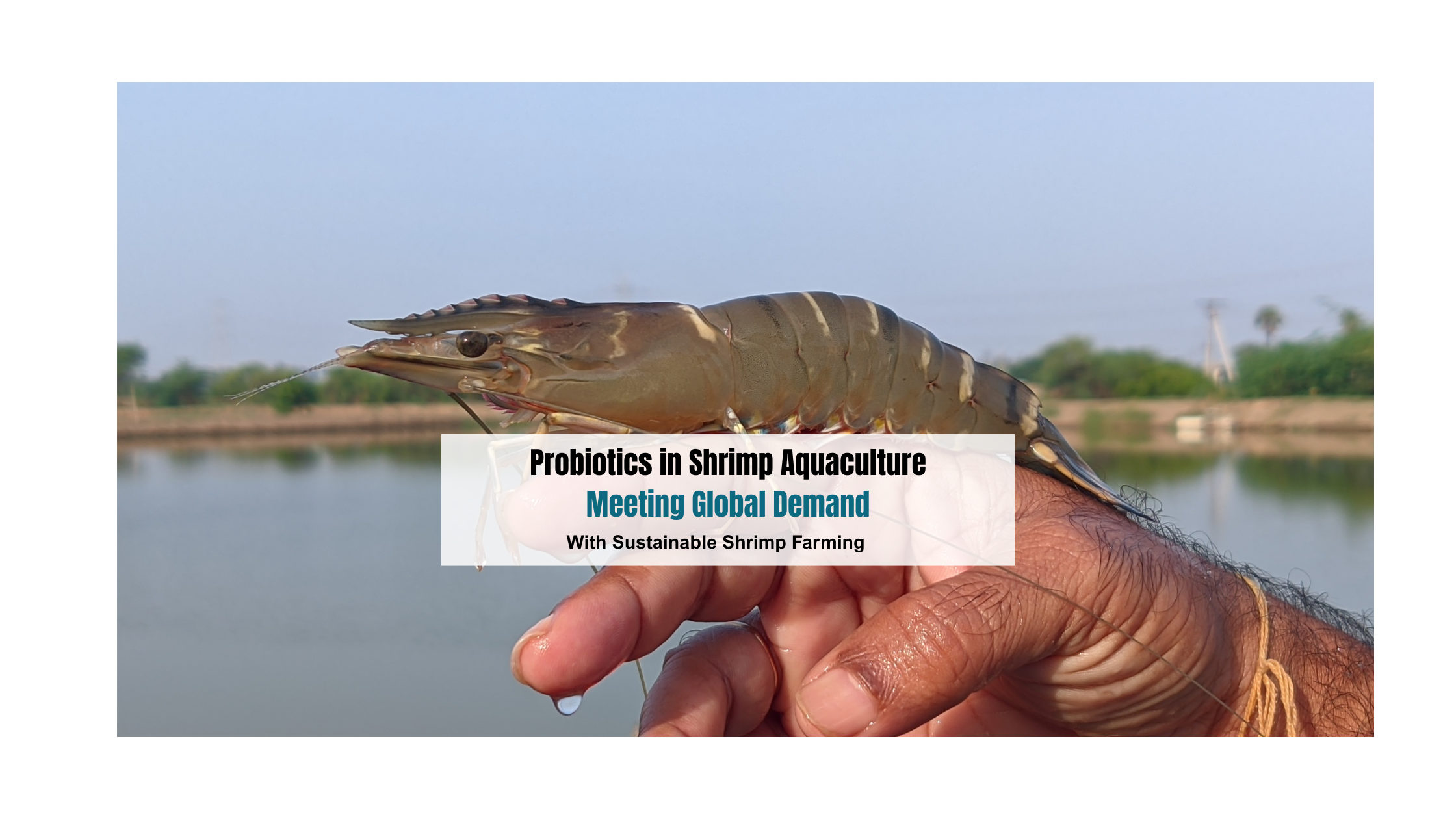

Probiotics in Shrimp Aquaculture: Meeting Global Demand Through Sustainable Farming and Modern Innovation
The global shrimp aquaculture industry is experiencing unprecedented growth, driven by rising consumer demand for sustainable seafood and protein-rich diets. As traditional fishing methods struggle to keep pace with population expansion, intensive shrimp farming has emerged as the solution to feed billions worldwide. Contact us to discover how we can transform your aquaculture operation with cutting-edge biotechnology solutions including advanced aquaculture probiotics.
The Rising Demand for Shrimp Production
Shrimp farming has become one of the fastest-growing sectors in global food production. With worldwide seafood consumption increasing by 3.1% annually, aquaculture production now accounts for over 55% of all shrimp consumed globally. Countries across Asia, Latin America, and increasingly Africa are expanding their shrimp cultivation operations to meet this surging demand.
The shift from wild-caught to farm-raised shrimp represents a fundamental transformation in how we approach sustainable seafood production. Modern shrimp farms can produce consistent, high-quality harvests year-round, independent of seasonal variations that affect traditional fisheries. This reliability makes commercial shrimp farming an attractive investment for entrepreneurs and established agricultural businesses alike.
Technological Innovations Revolutionizing Shrimp Aquaculture
Modern aquaculture technology is revolutionizing production through advanced systems and methodologies. Biofloc technology systems have emerged as game-changers, creating microbial communities that improve water quality while providing supplemental nutrition for shrimp. These systems reduce water usage by up to 90% compared to traditional methods, addressing critical environmental concerns.
Recirculating aquaculture systems (RAS) represent another breakthrough in intensive aquaculture. By continuously filtering and reusing water, RAS facilities can operate in land-locked areas far from coastal regions, opening new geographical markets for shrimp production. These controlled environments enable precise management of temperature, salinity, and oxygen levels—critical factors for optimal shrimp growth rates.
Precision water quality management systems equipped with IoT sensors and artificial intelligence provide real-time monitoring of ammonia, nitrite, pH, and dissolved oxygen levels. Early detection of parameter fluctuations allows farmers to take corrective action before stress impacts shrimp health and survival rates. This technological integration has increased production efficiency by 30-40% in advanced operations.
Disease Prevention and Biosecurity Excellence
Disease management remains the most critical challenge in shrimp aquaculture. Pathogens like White Spot Syndrome Virus (WSSV), Early Mortality Syndrome (EMS), and Vibrio infections can devastate entire farms within days, causing millions in losses. Progressive farmers are implementing comprehensive biosecurity protocols that include quarantine procedures, water treatment, and restricted farm access.
The Revolutionary Role of Probiotics in Shrimp Farming
Advanced shrimp probiotics have revolutionized disease prevention strategies and become indispensable tools for modern aquaculture operations. Probiotics for aquaculture are beneficial microorganisms—primarily Bacillus species, Lactobacillus, and beneficial yeasts—that colonize the shrimp gut and pond environment, creating a protective barrier against pathogenic bacteria.
Aquaculture probiotics work through multiple mechanisms: competitive exclusion of harmful bacteria, production of antimicrobial compounds, enhancement of digestive enzyme activity, and stimulation of the shrimp immune system. Studies show that probiotic supplementation can reduce mortality rates by 15-25% while improving feed conversion ratios by up to 20%.
Water probiotics applied directly to ponds accelerate the breakdown of organic waste, reducing toxic ammonia and nitrite levels that stress shrimp and make them susceptible to disease. These beneficial bacteria also outcompete Vibrio species and other opportunistic pathogens for nutrients and attachment sites, significantly reducing disease incidence.
Team One Biotech’s Advanced Probiotic Solutions
At Team One Biotech, we’ve developed a comprehensive range of specialized probiotic products designed to address every aspect of shrimp aquaculture:
T1B Aqua S is our premium water treatment probiotic formulated specifically for pond environment management. This multi-strain formulation rapidly establishes beneficial microbial communities that maintain optimal water quality parameters, reduce pathogenic loads, and create a stable aquatic ecosystem. Regular application of T1B Aqua S significantly improves survival rates during critical growth phases.
T1B™ Acqua F is engineered for feed supplementation, delivering targeted beneficial bacteria directly to the shrimp digestive system. This feed-grade probiotic enhances nutrient absorption, improves gut health, and strengthens immune response. Farmers using T1B™ Acqua F consistently report improved feed conversion ratios and faster growth rates.
T1B™ Feed Pro represents our advanced nutritional enhancement solution, combining probiotics with essential enzymes and growth promoters. This comprehensive feed additive optimizes digestive efficiency, maximizes nutrient utilization, and supports robust shrimp development throughout the production cycle.
T1B™ Bio Floc is specifically formulated for biofloc technology systems, providing the precise bacterial strains needed to establish and maintain healthy floc communities. This specialized product accelerates organic matter conversion, maintains stable C:N ratios, and ensures consistent floc quality—critical factors for successful biofloc-based shrimp farming.
Multi-strain probiotic formulations like those in our T1B product line provide synergistic benefits, with different bacterial species targeting specific challenges. For example, Bacillus subtilis excels at organic matter decomposition and enzyme production, while Bacillus licheniformis produces powerful antimicrobial peptides. Lactobacillus plantarum enhances gut health and nutrient absorption, directly improving growth performance.
Regular application of probiotics throughout the culture cycle—in hatcheries, nurseries, and grow-out ponds—creates a stable microbial ecosystem that maintains water quality and protects shrimp health. Progressive farms have reduced antibiotic usage by over 80% through comprehensive probiotic programs using products like T1B Aqua S and T1B™ Acqua F, addressing growing consumer concerns about antimicrobial resistance.
Shrimp hatchery management has also evolved significantly with probiotic integration. SPF (Specific Pathogen Free) and SPR (Specific Pathogen Resistant) post-larvae supplemented with probiotics from day one show improved survival rates during the critical early stages. Genetic selection programs are developing shrimp lines with enhanced disease resistance, faster growth, and better adaptability to varying salinity conditions.
Optimizing Nutrition and Feed Management
Shrimp feed optimization directly impacts profitability in aquaculture operations. Feed typically represents 50-60% of total production costs, making efficiency improvements highly valuable. Modern formulations incorporate highly digestible proteins, essential amino acids, immunostimulants, and omega-3 fatty acids that support rapid growth and disease resistance.
Incorporating probiotics like T1B™ Feed Pro and T1B™ Acqua F into feed formulations has become standard practice in advanced operations. Feed-based probiotics ensure consistent daily dosing and guarantee that every shrimp receives beneficial bacteria. This approach improves nutrient digestibility, enhances immune function, and reduces feed waste through better conversion efficiency.
Precision feeding strategies using automated feeders and appetite monitoring systems reduce waste while ensuring shrimp receive optimal nutrition throughout their growth cycle. Some operations have reduced feed conversion ratios from 1.8:1 to as low as 1.2:1 through careful feed management combined with probiotic supplementation, significantly improving profit margins.
Alternative protein sources including insect meal, single-cell proteins, and plant-based ingredients are reducing dependency on fishmeal while maintaining nutritional quality. These sustainable feed ingredients align with growing consumer demand for environmentally responsible aquaculture practices.
Vannamei: The Global Leader in Shrimp Production
Vannamei shrimp production (Litopenaeus vannamei) dominates commercial farming due to its exceptional adaptability, rapid growth rates, and strong market demand. This species thrives in various salinity levels, from freshwater to full-strength seawater, enabling production across diverse geographical locations.
Vannamei can reach marketable sizes of 15-20 grams in just 90-120 days under optimal conditions, allowing multiple crop cycles annually. Their tolerance to high stocking densities makes them ideal for intensive shrimp farming systems, where farmers can achieve yields exceeding 20 tons per hectare per crop.
The global market strongly favors Vannamei due to its mild flavor, firm texture, and versatility in culinary applications. This species accounts for approximately 80% of all farmed shrimp globally, establishing it as the industry standard. When combined with proper probiotic management using solutions like T1B Aqua S and T1B™ Feed Pro, Vannamei demonstrates exceptional performance and disease resistance.
Embracing Sustainable and Organic Practices
Sustainable shrimp farming practices have become essential for market access and regulatory compliance. Progressive farmers are adopting zero-water exchange systems, constructed wetlands for effluent treatment, and integrated multi-trophic aquaculture that combines shrimp with seaweed and other species to create balanced ecosystems. Probiotics like T1B Aqua S play a crucial role in these systems by maintaining water quality without chemical interventions.
Organic shrimp farming represents a premium market segment commanding 20-30% higher prices. Organic certification requires adherence to strict standards including chemical-free pond preparation, certified organic feed, prohibition of antibiotics, and minimum stocking density requirements. Organic probiotics derived from naturally occurring strains are essential tools for organic farmers, providing disease protection without compromising certification.
Mangrove-friendly farming practices and certification programs ensure that shrimp cultivation doesn’t contribute to coastal ecosystem degradation. Responsible farms maintain buffer zones, restore degraded areas, and implement waste management systems enhanced by probiotic treatments that protect surrounding environments.
Biofloc Systems: The Future of Intensive Production
Biofloc technology represents one of the most promising innovations in modern shrimp aquaculture. These systems create self-sustaining microbial communities that convert waste into protein-rich biomass, providing supplemental nutrition while maintaining excellent water quality.
Successful biofloc systems require precise bacterial management, which is where T1B™ Bio Floc delivers exceptional value. This specialized formulation contains carefully selected strains that establish robust floc communities, maintain optimal carbon-to-nitrogen ratios, and prevent the dominance of undesirable microorganisms. Farmers using T1B™ Bio Floc achieve faster system stabilization, more consistent production, and superior shrimp health outcomes.
The Future of Shrimp Aquaculture
The future lies in integration—combining biotechnology, automation, and data analytics to create smart farms. Artificial intelligence algorithms analyze historical data to predict optimal harvest times, disease outbreaks, and market conditions. Automated systems handle feeding, water quality adjustments, probiotic dosing, and health monitoring with minimal human intervention.
Genetic improvement programs are developing “super shrimp” with 30-40% faster growth rates and enhanced disease resistance. CRISPR and selective breeding technologies promise to accelerate improvements that traditionally required decades of conventional breeding. When combined with advanced probiotic regimens using products like T1B™ Feed Pro and T1B™ Acqua F, these improved strains achieve unprecedented performance levels.
Indoor vertical shrimp farming facilities are emerging in urban areas, bringing production closer to consumers while eliminating transportation costs and environmental impacts. These high-tech operations achieve production densities previously thought impossible, with some facilities producing over 100 tons per hectare annually through intensive probiotic-based biofloc systems utilizing T1B™ Bio Floc.
Partner with Team One Biotech
At Team One Biotech, we empower farmers with cutting-edge solutions that bridge the gap between traditional practices and industrial-scale shrimp aquaculture production. Our comprehensive portfolio includes advanced probiotics (T1B Aqua S, T1B™ Acqua F, T1B™ Feed Pro, T1B™ Bio Floc), water quality management systems, nutritional supplements, and technical consultation services designed to maximize your farm’s productivity and profitability.
Our specialized aquaculture probiotic formulations are developed through rigorous research and field testing, ensuring optimal strain selection, viability, and performance under diverse farming conditions. Whether you need water treatment probiotics like T1B Aqua S, feed-grade formulations such as T1B™ Feed Pro and T1B™ Acqua F, or biofloc-specific products like T1B™ Bio Floc, we provide solutions backed by scientific evidence and proven results.
Whether you’re establishing a new operation or optimizing existing infrastructure, our experienced team provides customized solutions tailored to your specific environmental conditions, target markets, and production goals. We understand that successful aquaculture farming requires more than just products—it demands partnership, knowledge transfer, and ongoing support.
Contact us today to start your journey toward more productive, sustainable, and profitable shrimp farming. Let us help you meet global demand while building a resilient, future-ready aquaculture operation powered by cutting-edge probiotic technology.
As one of the leading biotech companies in India and trusted bioremediation companies in India, Team One Biotech continues to deliver solutions that redefine sustainability across wastewater treatment, agriculture, aquaculture, and hygiene management.
Email: sales@teamonebiotech.com
Visit: www.teamonebiotech.com
Discover More on YouTube – Watch our latest insights & innovations!-
Connect with Us on LinkedIn – Stay updated with expert content & trends!